XERJ · BLOG · THE ENGINEERING LOG

MEASURED,
WRITTEN DOWN.

We write up the measurements as they happen, and we leave the losing rows in the tables. Every post is dated and names the runs it came from, because a number you cannot trace back to a run is marketing.
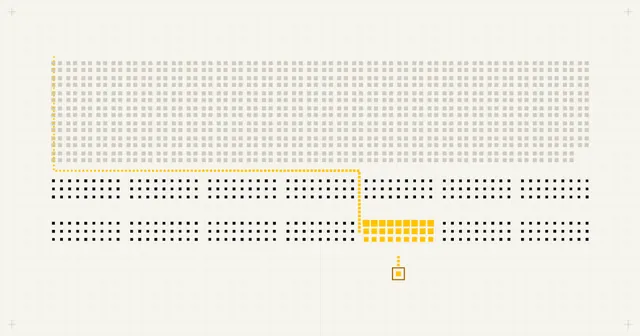
  1. Cover art: a faint wall of 251 small tiles above 14 larger square-matrix tiles; a yellow route runs from the top into one yellow tile and down to a framed node

    · CORPUS HUB · XERJ ASK

    Corpus Hub v2: ask the question, get the one pack that answers it

    Type a question and xerj picks the corpus from a signed catalogue, pulls that one pre-indexed pack (lz4: 4.4 MB) and answers on your machine: 1.7 to 2.3 s cold, 37 to 57 ms warm. Ambiguous questions come back as a choice (exit 4), and a dead hub now has its own code (exit 6). The hub site gained contributor pages, agent scores kept apart from human stars, per-corpus traffic and field reports that become PRs. The routing miss we hit, and the catalogue lagging the packs (14 routable of 251 built), are in the post.

    READ THE POST →
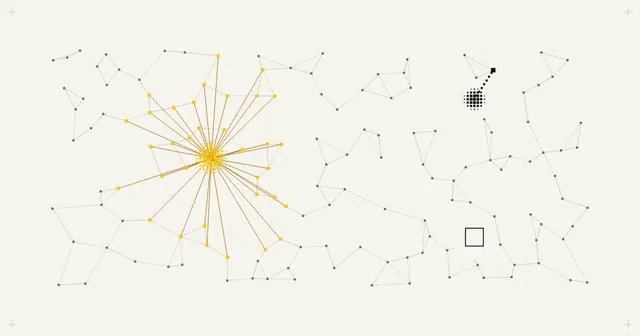
  2. Cover art: a network of small square nodes; a yellow hub linked to 36 yellow nodes, an ink node with one link, and an empty square frame with none

    · CYBER-EXPLOITS CORPUS · EVAL

    The exploit hub, tested on three fresh CVEs

    One query over 1.09 million PoC documents named the exact route and field for CVE-2026-23744; an in-corpus 2026 exploit named the exact denylist segments the vendor shipped for CVE-2026-105844; the third case proved the corpus adds nothing when its stratum is empty, and we count it. The vendor patch beat both arms on the needle, the eval caught a live client defect, and the losses are in the tables.

    READ THE POST →
  3. Cover art: six clusters of diagonal scratch marks made of small squares, five in ink and one in yellow

    · GUEST · AGENT MEMORY · EVAL

    Six eval scars from a production agent-memory system

    We asked practitioners what agents still miss. Chunxiao Wang (Assay / nautilus-compass) answered with six patterns that each cost a real failure: topic slicing that beat token windows on recall@1 by double digits and reversed two embedders' MTEB ranking; a 0.87 classifier a 0.78 always-yes baseline nearly matched at n=60; the masking bug that scores every query zero; and the paired-vs-unpaired read that overstated an effect 4×. Their price was an honest answer to where our corpus registry is thin against their workload. We checked: zero of 99 live corpora are agent trajectories, and our chunking is the wrong shape for topic-sliced session memory. The want now has a named backlog slot.

    READ THE POST →
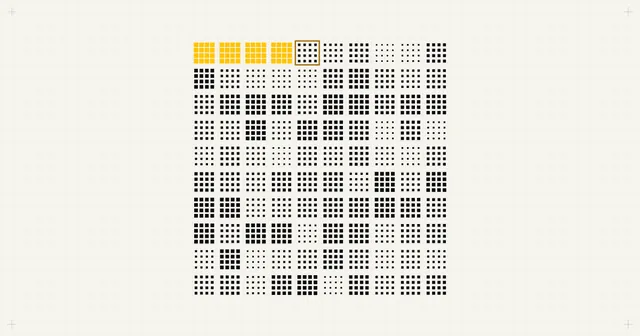
  4. Cover art: a 10 by 10 wall of square-matrix pack tiles in shades of ink, the first four solid yellow and the fifth framed

    · CORPUS HUB · AGENT CONTEXT

    The Corpus Hub: pinned, licenced, signed, and contributed by pull request

    Agent context is everyone's private plumbing: unknown vintage, unknown licence, no checksum, no signature. The Corpus Hub makes it a registry — four reference corpora and a signed daily pack, every source pinned to the SHA the build used and licence-reviewed by a human. The measured use case: same 16/16 solve rate at 2.7× fewer output tokens. And the experiment we did not want: our own security A/B tied — zero findings traceable to the corpus — so the hub ships with that row in the table and a code-shaped pack as its roadmap.

    READ THE POST →
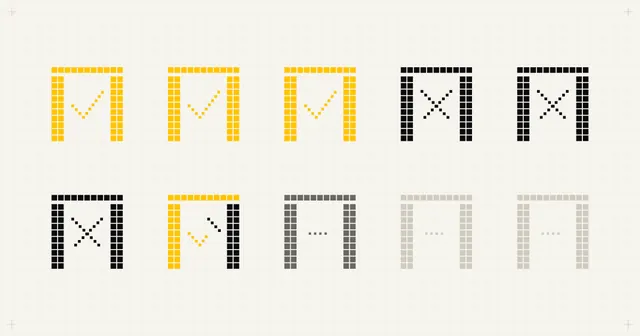
  5. Cover art: ten gates built from squares in two rows: three yellow with check marks, three ink with crosses, one half yellow and three faint

    · RELEASE GATES · ENGINEERING

    The rc.80 gates: three passed outright, three failed, one split

    The ten-item program shipped, and every gate that could carry a number was run in public. /_ask scored macro-F1 0.9975 at p50 1.129 ms; xerj_map took unknown-field 400s from 20/30 to 0/30; calibration took FiQA ECE from 0.3109 to 0.0088. The local judge lost everywhere it was measured, the flywheel covered 19.72% against an 80% bar, and the decide head missed its accuracy bars — those rows are in the post too, and they filed four issues.

    READ THE POST →
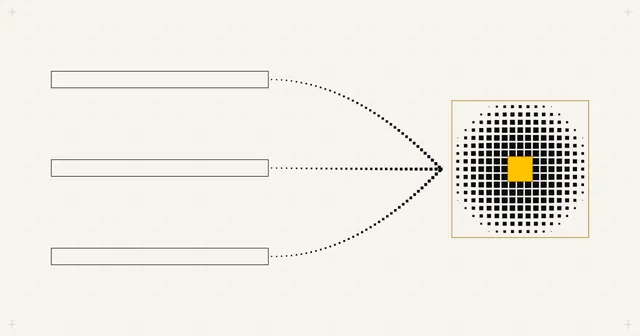
  6. Cover art: three outlined boxes trailing lines of small squares that converge on one square-matrix disc with a yellow seal at its centre

    · CORPUS PACKS · SECURITY DATA

    One vulnerability, three names, and a pack we sign

    The same Rust vulnerability sits in two databases under three ids, and neither database merges them. A three-line identity recipe collapses 4,107 filings to 1,950 records carrying every field either source knew — including the curated vulnerable-function paths no export has. Then the part nobody ships: a signature, because checksums prove integrity and not origin.

    READ THE POST →
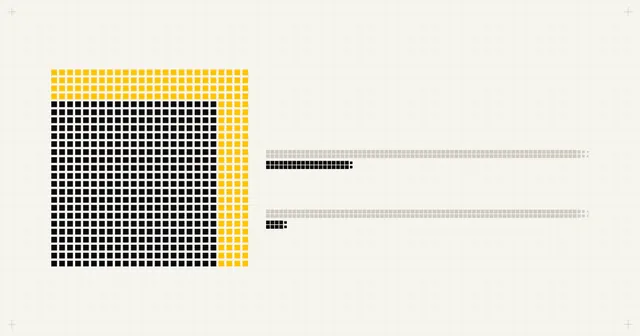
  7. Cover art: a large ink block of squares wrapped in a yellow L-shaped band that marks the 28% cut, beside two pairs of thin before-and-after bars

    · STORAGE · ENGINEERING

    Cutting the index 28%: dissect first, write Rust second

    Four file formats, each changed only after a real segment was dissected offline. The stored section fell −73.1%, term metadata −93.1%, and the whole index went from 5.52 MB to 3.99 MB. The variant we were most confident about doubled the size it was improving — that row is in the post too.

    READ THE POST →
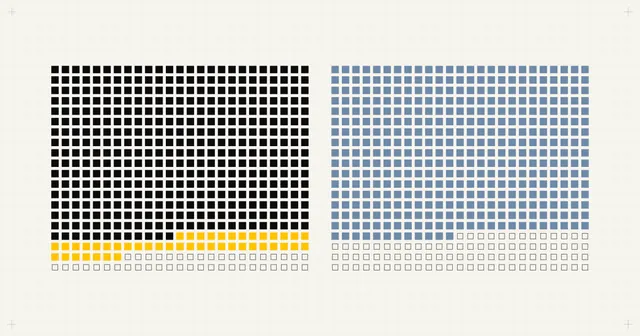
  8. Cover art: two grids of 500 squares, filled for correct answers; the ink grid has a band of yellow squares where it beats the blue grid

    · BENCHMARKS · DECISIONS

    A BM25 vote ties Jev on spam and beats it on intent

    Five hundred decisions each, on two public datasets. On spam the two are statistically indistinguishable (McNemar p = 0.75). On 77-way intent a local vote wins by nine points at zero marginal cost. The crossover is twenty-five labelled examples per class. On DBpedia Jev beats us outright, and that row stays in.

    READ THE POST →
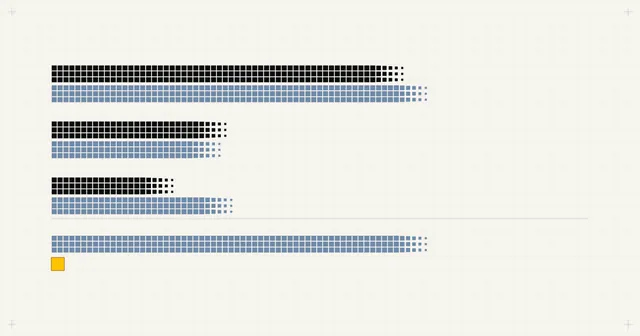
  9. Cover art: three pairs of square-matrix bars, ink for XERJ and blue for BM25+Jev, over one long blue bar and a single yellow square for the zero-cost local run

    · BENCHMARKS · JEV

    Does XERJ beat JEV? On the bill, outright. On FiQA, no.

    Does XERJ beat JEV? On the bill, outright — the FiQA rerank run billed $0.6375 and 15,178,758 judge tokens, while our local node answers the same wire with zero. On relevance the hosted judge keeps SciFact (0.7410 vs 0.6993) and FiQA (0.3638 vs 0.2382, +0.126); our zero-API-token hybrid keeps NFCorpus (0.3448 vs 0.3312). And the unmodified pip jev-reranker passed its own gate against a XERJ node. Every win, every loss, with the receipt.

    READ THE POST →

More measured ground lives in the benchmarks hub: /benchmarks — the ES conformance board, BEIR baselines, and the Jev tables, every number traced to a run.

If you would rather check a number than read about it: the engine is one binary, the quickstart walks a first index, the playground needs no install, and your own corpus is the benchmark that matters — the standard every post above holds itself to.